
The Fed Held Rates Steady, and Still Got It Wrong
By Peter Navarro | RealClearMarkets | July 30, 2026
The Federal Reserve did not raise interest rates. That is the good news.
The bad news is almost everything else.
In a 9–3 vote, the Fed held its target range steady at 3.50% to 3.75%. Yet three regional Fed presidents — Beth Hammack of Cleveland, Neel Kashkari of Minneapolis, and Lorie Logan of Dallas — dissented in favor of a quarter-point rate hike.
That is the real story. Not the hold. The dissents.
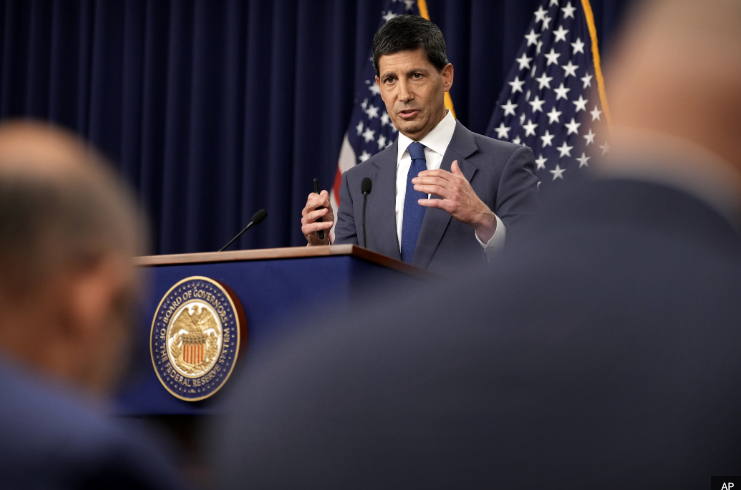
Markets initially took the hold in stride. The front end of the Treasury market rallied on relief, with the two-year yield easing. Then Chairman Kevin Warsh started talking. Over the course of a hawkish press conference, the Dow surrendered its early recovery and plunged, closing down more than 1,100 points — its worst daily drop in fifteen months.
The S&P 500 fell about 1.5%. Long-term Treasury yields climbed, with the 30-year bond yield pushing above 5.2% intraday, its highest level since 2007. By day’s end, futures markets put the odds of a September hike at roughly 60%.
This was not a victory for monetary sanity. It was a warning flare.
The Fed’s problem is simple: too many around that table are still fighting the wrong inflation war. They are looking at energy-driven headline inflation and seeing a demand boom. They are looking at a supply shock and reaching for a demand-destruction tool. They are looking at Trumponomics — tariffs, tax incentives, capital investment, reshoring, productivity, AI buildout, and manufacturing revival — and failing to understand that growth can expand supply without igniting broad inflation.
That is why this meeting was such a poor outcome even without an actual hike.
The most recent CPI and PPI reports should have settled the argument. June CPI fell 0.4%. Core CPI was essentially flat. Gasoline prices fell nearly 10%. Real wages rose. Then PPI confirmed the same trend: producer prices fell, and core PPI came in below expectations. Those June readings predate July’s Iran-driven oil spike — which is exactly the point. The underlying trend was already cooling before the shock hit.
That is not an economy screaming for tighter money. That is an economy absorbing an energy shock while the underlying core trend cools.
A stagflationary oil-price shock already does much of the contractionary work of a rate hike. It taxes consumers at the pump, cuts real wages, drains purchasing power, and slows demand without any help from the Fed.
That is why raising rates into the teeth of an oil shock is not merely unnecessary. It is dangerous.
Alan Greenspan understood that during the Gulf War oil shock. Ben Bernanke understood it during the 2008 oil spike, when crude neared $150 a barrel and the European Central Bank hiked — while the Fed wisely held. The Federal Reserve cannot drill a barrel of oil, refine a gallon of gasoline, secure a shipping lane, or deter Iran with a rate hike. What it can do is crush housing, chill investment, slow manufacturing, and turn temporary energy volatility into a real recession.
That is precisely the danger now.